
About The Vivek Project
Documenting Piano Pedagogy on Video
Our Mission
The Vivek Project is a free service provided by the Oclef Foundation, dedicated to documenting piano pedagogy on video. Our mission is to illuminate the teaching and learning process that has remained hidden for far too long.
Why This Matters
Since the time of Bach, piano instruction has largely taken place behind closed doors. While countless method books have been published over the centuries, they haven't been doing an adequate job. The evidence is clear: there are too many dropouts, too many students who abandon their musical journey before truly experiencing the joy and mastery that comes with learning piano.
Method books, no matter how well-intentioned, can only capture a fraction of what actually happens in a successful learning environment. They present exercises and pieces in isolation, but they cannot show the dynamic, human elements that make the difference between a student who perseveres and one who gives up.
The Unique Challenge of Piano Pedagogy
The piano stands apart from most other instruments in a fundamental way: it requires students to simultaneously read and play both melody and harmony. While a violinist focuses on a single melodic line or a trumpet player on one part at a time, a pianist must coordinate multiple voices, often with independent rhythms and articulations, across two hands.
This unique characteristic makes piano instruction especially complex. Success at the piano demands far more than basic note reading. Students must develop:
- Hand Independence: The ability to have each hand perform different musical tasks simultaneously—one playing melody while the other provides harmonic support
- Coordination: Physical synchronization between hands while reading two different staves, often with different rhythmic patterns
- Spatial Awareness: Understanding the keyboard geography and developing muscle memory for hand positions and movements
- Multi-layered Listening: The capacity to hear and balance multiple voices within a single performance
- Harmonic Understanding: Recognizing chord structures and progressions that provide the foundation for melodic expression
These specialized skills require instruction that goes far beyond what can be conveyed through written exercises alone. A student might understand intellectually what needs to happen, yet struggle to coordinate their hands to execute it. They might read the notes correctly but miss the harmonic relationships that give the music its meaning. This is why documented, video-based pedagogy is so valuable—it captures not just what to play, but how to develop the complex, integrated skills that make a pianist.
The Art of Knowledge Transfer
At its core, teaching is about transferring knowledge. But teaching something as complex as a piano isn't simply a matter of conveying information—it requires the teacher to carefully order the transfer of knowledge in a particular, deliberate sequence.
Consider a new piano composition: should a student learn the melody first, or the harmony? The rhythm, or the notes? The fingering, or the phrasing? The dynamics, or the articulation? The answer matters enormously. For example, a student should typically master the melody before dynamics—attempting to add expression before the notes are secure leads to inconsistent playing and ingrained errors that are difficult to correct later.
When knowledge transfer is sequenced correctly, students learn efficiently and build a solid foundation. Each concept reinforces the previous one, creating a natural progression toward mastery. When sequenced poorly, the result is frustration, confusion, and often, dropout. Students feel overwhelmed, unable to integrate multiple new concepts simultaneously, and begin to doubt their own ability.
Unfortunately, many teachers take shortcuts by simply showing students what to do and having them copy it. While this might produce quick results in the moment, this is not teaching. True teaching involves breaking down complex tasks into learnable components, presenting them in the right order, and ensuring the student understands not just what to do, but why and how. Copying bypasses understanding—it creates students who can mimic but cannot think, who can play one piece but cannot transfer their learning to the next.
By documenting actual lessons on video, The Vivek Project reveals how skilled teachers sequence knowledge transfer, when they introduce each new concept, and how they ensure genuine understanding rather than mere imitation. This transparency benefits not only students trying to learn, but teachers seeking to refine their own pedagogical approach.
Beyond Teaching: Understanding How Students Learn
This project isn't just about teaching—it's about understanding how students actually learn. There are multiple variables that contribute to success in piano education, variables that no method book can adequately capture or demonstrate:
- The Student: Each learner brings their own background, learning style, challenges, and moments of breakthrough. How do students develop over time? How do different students approach the same piece? What obstacles do they encounter, and how do they overcome them?
- The Teacher: Every instructor has their own approach, their own way of communicating musical concepts, and their unique methods for inspiring and guiding students. What works? What doesn't? How do great teachers adapt to individual needs?
- The Composition: Different pieces present different pedagogical opportunities and challenges. How does the choice of repertoire affect learning? What makes certain pieces particularly effective for developing specific skills? What are the common concepts in every composition?
By documenting these interactions on video, we can begin to see patterns, understand what truly works, and share these insights with teachers and students around the world.
In Honor of Vivek Anand
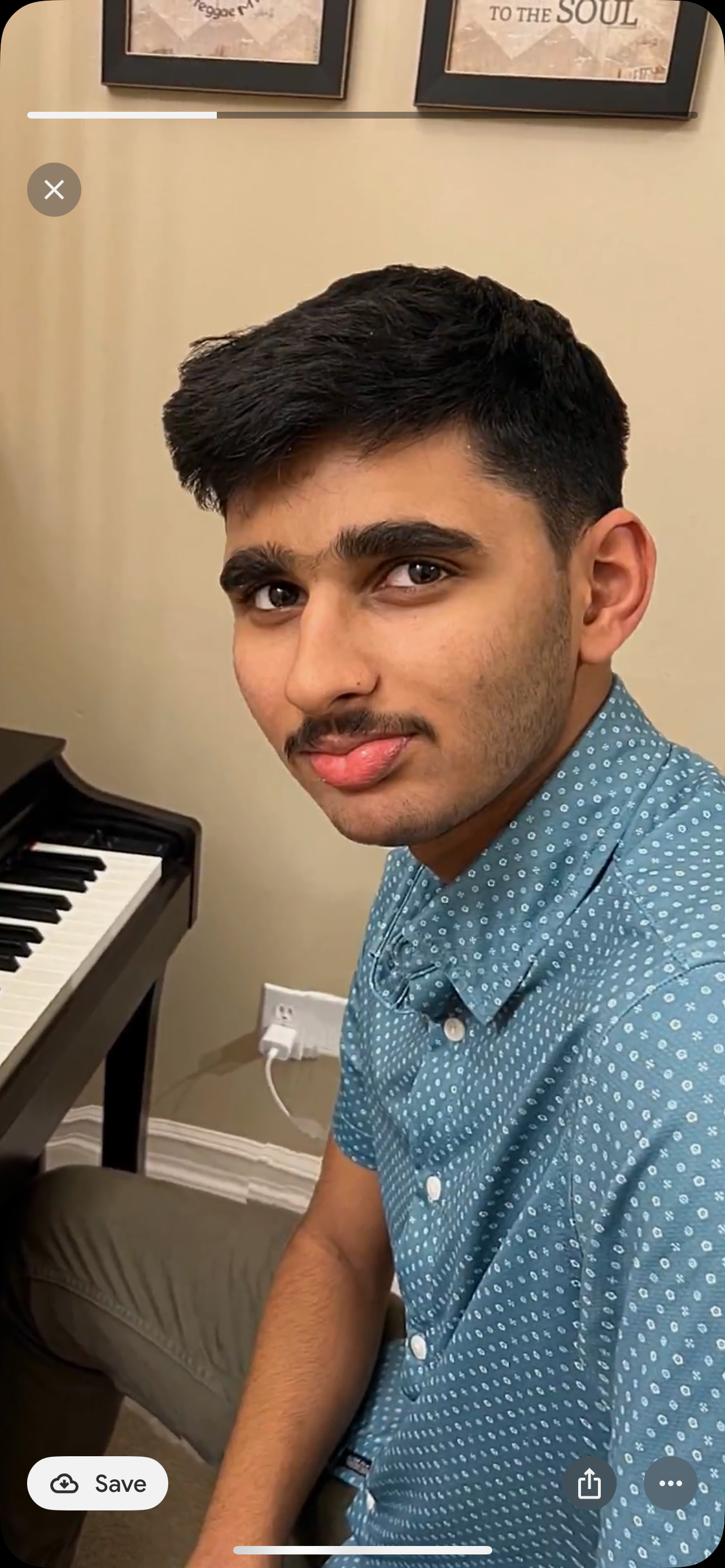
The website is named in honor of Vivek Anand, a student of Oclef Piano who became the first to allow us to document his learning process on video. His willingness to have his lessons recorded—with all the struggles, breakthroughs, and growth that learning entails—made this entire initiative possible.
Vivek's journey represents what we hope to capture for countless others: the real, unfiltered process of becoming a musician.
Every Vivek Project featured on this site will continue to honor his legacy by providing transparent, honest documentation of the piano learning process.
Our Hope for the Future
We hope to change the landscape of piano education by making the teaching and learning process visible, accessible, and understandable. By documenting real lessons with real students learning real music, we aim to:
- Reduce the dropout rate by helping students and teachers understand what successful learning looks like
- Provide teachers with models and inspiration for their own teaching
- Help students see that struggles are normal and that mastery is a process
- Build a community around shared learning and continuous improvement
- Create a lasting archive of pedagogical practice for future generations
Join us in making piano education more transparent, more effective, and more accessible to everyone.
The Vivek Project is and will always remain free, thanks to the generous support of the Oclef Foundation and its contributors.
The source code for this website is maintained by Oclef Inc.
The code is open source, licensed under the MIT License, and available on GitHub.